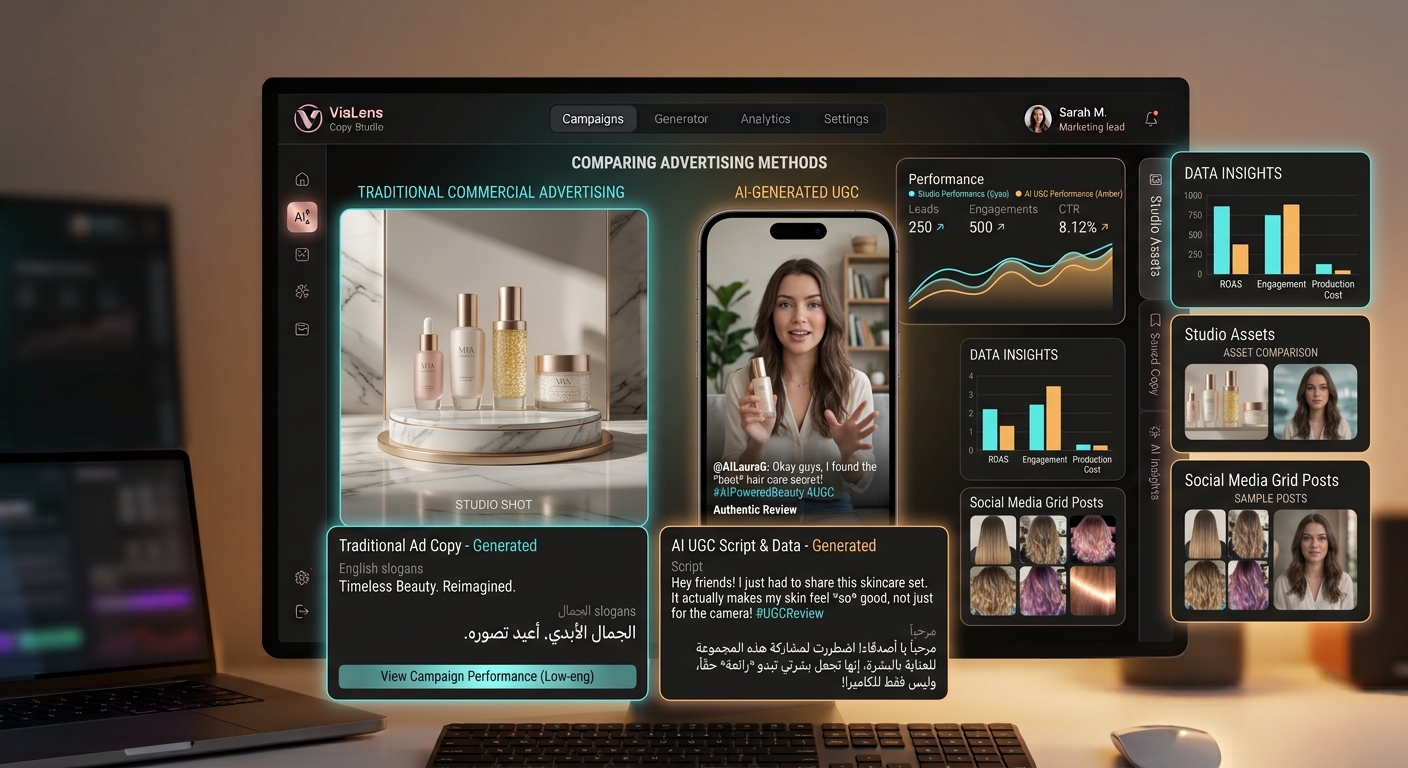
Product advertising has changed significantly with the rise of AI-powered creative tools. Businesses can now create product visuals, short-form videos, and advertising copy without relying on a completely traditional production process for every campaign.
One of the most useful developments is AI UGC — content designed to have the conversational and creator-style feel commonly associated with user-generated content.
What Is Traditional Product Advertising?
Traditional product advertising usually focuses on presenting a product through professionally produced photography, video, graphic design, or commercial advertising. The production process can involve photographers, models, physical locations, studio equipment, video crews, editors, and copywriters depending on the campaign.
What Is AI UGC?
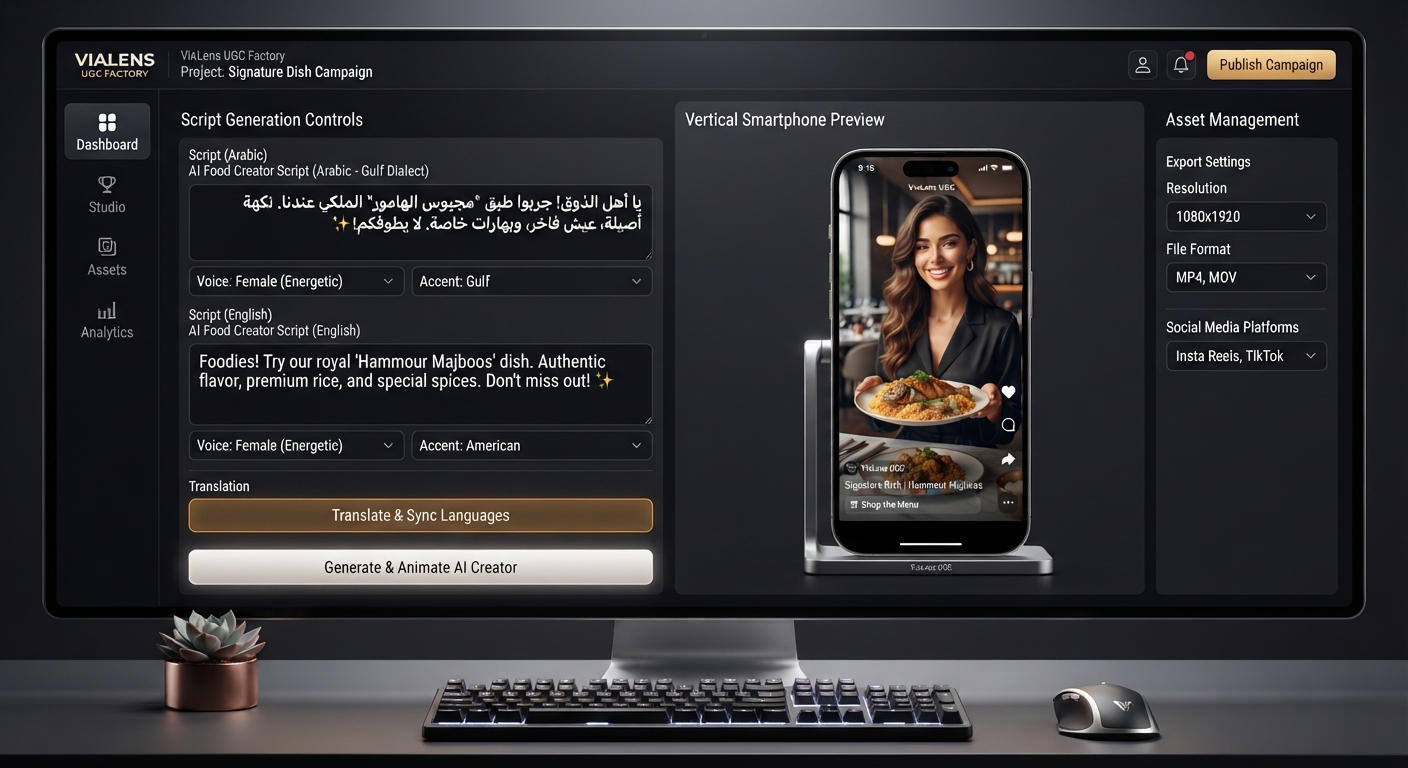
AI UGC refers to AI-generated content designed around the style and structure of creator-led social content. Instead of presenting a product like a traditional commercial, the content uses an AI actor, a conversational script, a selected voice, and a product-focused message.
With ViaLens UGC Factory, businesses can create short-form UGC-style videos around their products and marketing objectives without pretending the content came from a real customer.
Key Differences
| Area | AI UGC | Traditional Advertising |
|---|---|---|
| Production | AI-powered creative workflow. | Usually involves traditional production resources. |
| Format | Creator-style and conversational content. | Commercial, studio, or professionally produced content. |
| Actors | Can use AI-generated actors. | Typically uses real models, actors, or presenters. |
| Location | No physical studio or location required. | May require a studio, set, or real-world location. |
| Variations | Rapid AI-generated visual & script variations. | Requires additional re-shoots or editing resources. |
| Style | Natural, conversational, social-first. | Polished, commercial, or editorial. |
AI UGC and Product Photography Can Work Together
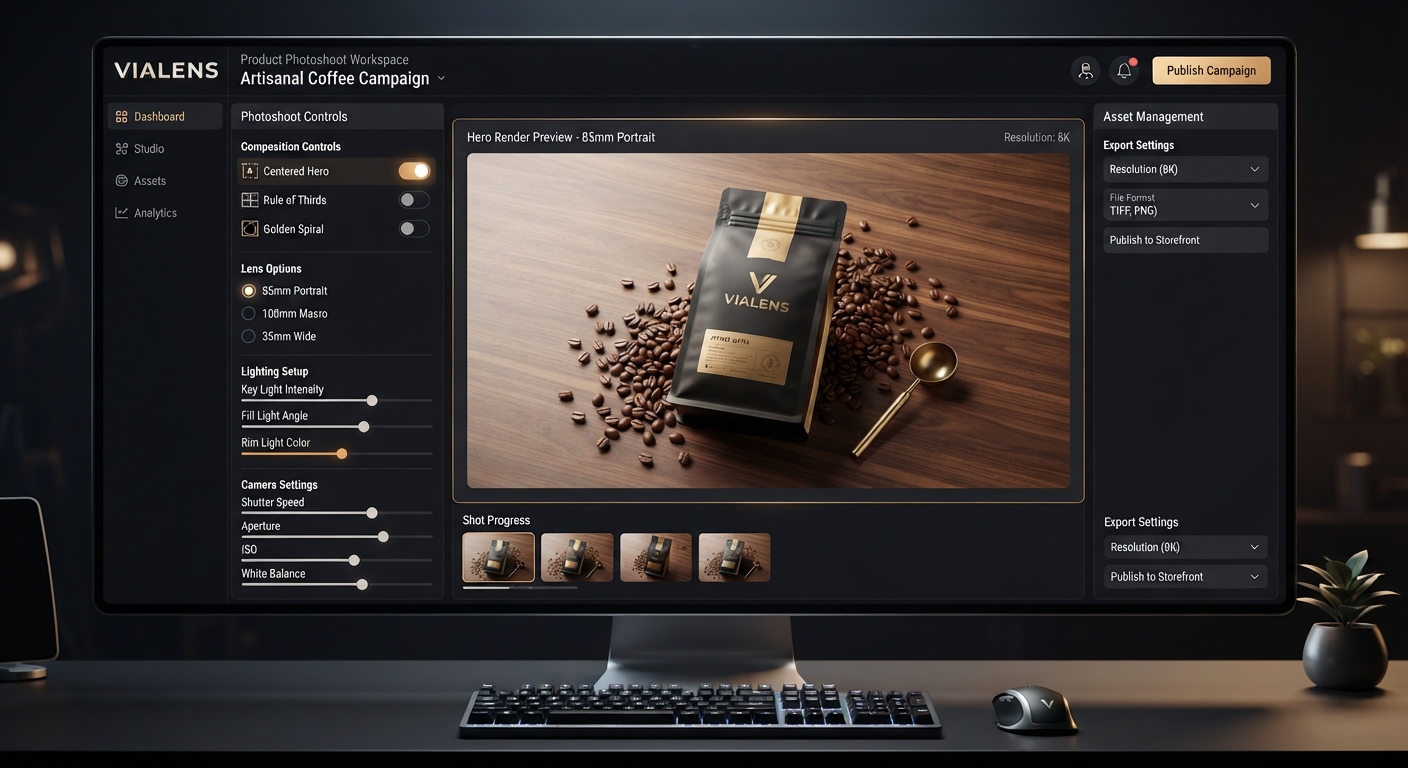
The choice does not have to be between AI UGC and traditional product photography. An e-commerce business can use Product Photoshoot to create professional product imagery and UGC Factory to create a short conversational video introducing the same item.
How AI Changes the Creative Workflow
| Stage | Purpose |
|---|---|
| Product Reference | Provide an accurate starting point for the campaign. |
| Product Photoshoot | Create polished product and lifestyle imagery. |
| UGC Factory | Create short-form conversational product videos. |
| Copy Studio | Create campaign messaging and advertising copy. |
| Brand Kit | Maintain consistent brand direction across the creative workflow. |
Important Considerations When Using AI UGC
- Be transparent and responsible: Do not present AI actors as real customers or fabricate testimonials.
- Keep product details accurate: Ensure visuals and scripts match real product specifications and benefits.
- Review final creative: Always verify claims and offers before launching campaigns.
Build Your Next Product Campaign With ViaLens
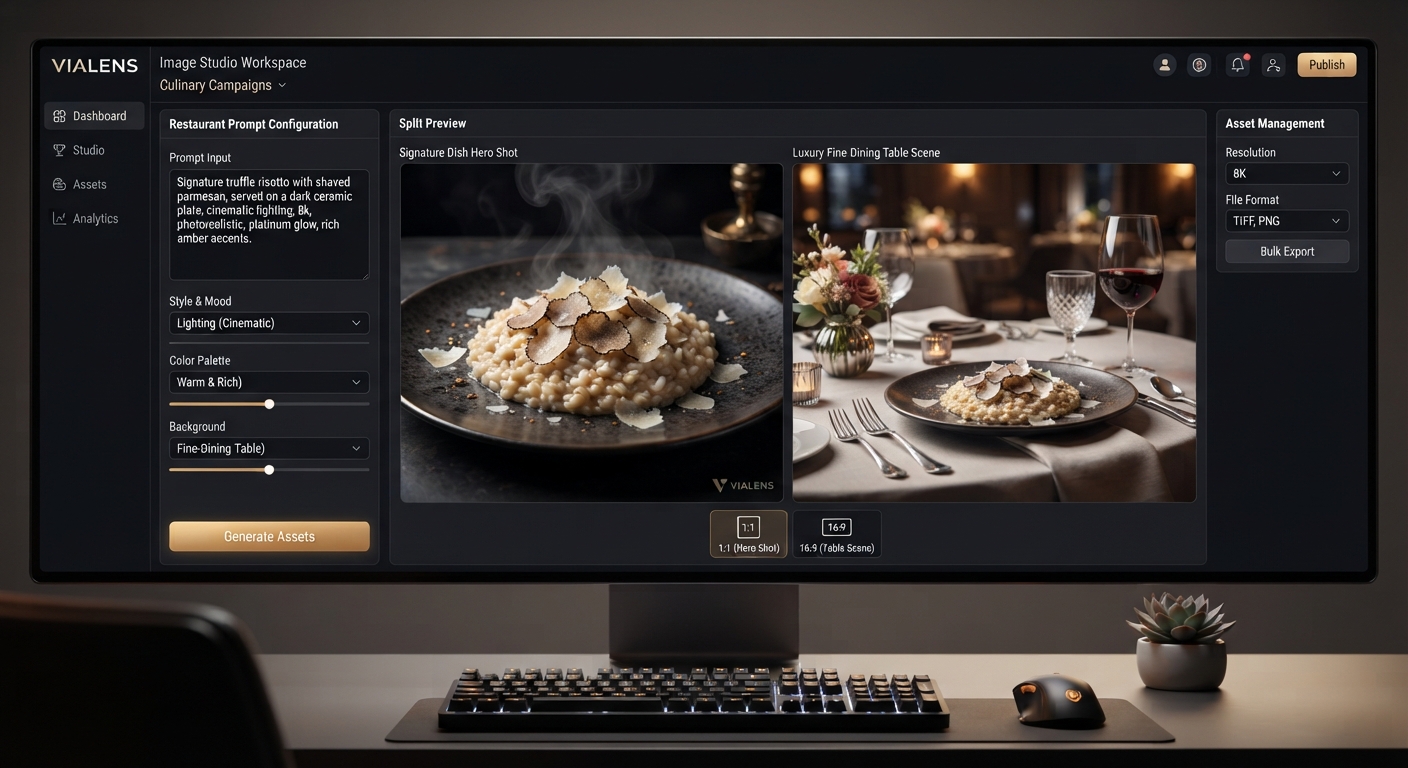
Use Product Photoshoot for studio imagery, UGC Factory for creator-style videos, Image Studio for visual concepts, and Copy Studio for campaign ad text within ViaLens.
التعليقات (0)
كن أول من يترك تعليقًا.